.png)
Texas school districts turn to voters for funding as budget pressures mount
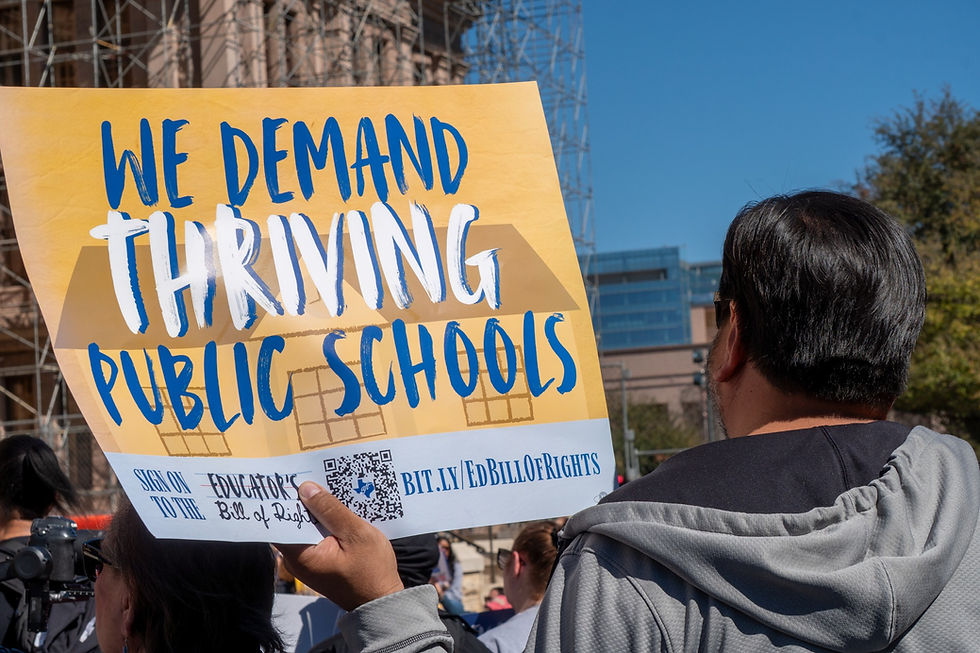
Across Texas, school districts are asking voters to help fund teacher salaries, protect classroom programs, and address aging facilities in the Nov. 3 election. Among them are Cypress-Fairbanks, San Antonio, Northside and Socorro ISDs, where voters will consider proposals totaling billions of dollars for school operations and infrastructure.
The elections come as districts continue struggling with rising operating costs, enrollment changes, and longstanding disagreements over state education funding. Although the Legislature approved additional public school funding in 2025 via HB 2, educators and district leaders have argued that the increases haven't fully addressed years of inflation and growing expenses. Gov. Greg Abbott and lawmakers also approved a separate $1 billion private school voucher program, adding another major component to the state's education spending debate. A recent Houston Chronicle investigation documented how declining enrollment, inflation, and rising insurance costs have contributed to budget deficits across Houston-area districts.
For voters, the proposals generally fall into two categories. A voter-approval tax rate election, or VATRE, allows a district to seek additional operating revenue for expenses such as educator pay, classroom materials, and student programs. School bonds, meanwhile, allow districts to borrow money for longer-term investments, including building renovations, safety improvements, and technology. Both require voter approval and can affect property taxes, but the money serves different purposes.
Texas AFT has endorsed the propositions in all four districts as they are a good deal for the voters, students, and families. These propositions will go a long way in addressing concerns about school funding, staffing, and the condition of public school facilities.
What's on the ballot?
In Cypress-Fairbanks ISD, voters will consider five propositions. Proposition A would generate approximately $103.6 million in additional annual operating revenue to support educator compensation, classroom resources, and other district expenses. Propositions B through E make up a roughly $1.6 billion bond package addressing school building repairs, safety and security, instructional technology, athletic facilities and swimming pools.
The district has already made difficult budget decisions in recent years, including eliminating librarian positions and reducing transportation services. According to district officials, Cy-Fair has reduced operational spending by more than $94 million over the past three fiscal years. The upcoming election places those ongoing financial challenges alongside the district's longer-term facility needs.
San Antonio ISD is seeking approximately $5.5 million in additional operating revenue through Proposition A, with proposed investments in employee compensation, college and career readiness, and student programs. Voters will also consider a $600 million bond package across Propositions B through D, largely focused on modernizing campuses and improving school safety.
In Northside ISD, also in the San Antonio area, the board of trustees voted to put various propositions on the Nov. 3 ballot. Proposition A would increase the tax rate by just 3 cents, providing public schools with $21.5 million to pay educators and protect schools from deep budget cuts. Propositions B through D propose an $866 million bond package that would go towards security infrastructure, HVAC repairs, and many other school improvements. In particular, the HVAC repairs come at a good time as schools in the San Antonio-area have had highly publicized issues with keeping classrooms cool during intense heat waves. Northside ISD has been facing a $38 million budget cut due to declining enrollment and flat state funding as well as inflation.
In Socorro ISD, Proposition A would increase the tax rate by 12 cents, giving the district $49 million to pay educators, reduce class sizes, improve schools' heating and cooling systems, and protect schools from deep budget cuts. For the past decade, Socorro ISD has had to spend more than it's been able to generate. Along with declining enrollment and payroll spending limits, the district’s current budget has been struggling to make ends meet, which has deleterious knock-on effects for the surrounding community.
School districts should not have to be forced to push for last-resort propositions to keep themselves afloat. This issue is worsening in part as a result of the voucher boondoggle; by moving students to private schools, where state curricula and standards are not enforced, publicly accountable school districts have to make do with less student-based funding. Governor Abbott has been leading the fight against public education, something that has become abundantly clear through the decline in per-pupil funding, Bluebonnet curricula, and the attacks on diversity, equity, and inclusion. This has forced the hand of school districts when it comes to funding in particular, and voters should know where the blame lies.
Early voting begins next week, Oct. 19 and will run through Oct. 30. Election Day is on Tuesday, Nov. 3.