.png)
The Fight for Freedom in the Classroom Reaches the Courts
Updated: Jul 24

Last week, Texas AFT-AAUP sued Chancellor Brandon Creighton and the Texas Tech University System Board of Regents over two system memoranda issued in April and December. Plaintiffs allege that the fallout has reached well beyond any one classroom and does not follow any consistent pattern. Faculty have been asked to cut specific words and phrases from their syllabi without knowing whether the underlying ideas are still allowed, and even the university administrators responsible for enforcing the policy have, at points, been unable to explain what it requires. For professors needing to plan a semester months in advance, that uncertainty has pushed many to cut more than the rules technically demand, just to stay safe.
Texas Tech administrators reviewed roughly 8,500 courses at Texas Tech University alone by early May 2026. About 500 went to the board of regents’ Academic, Clinical, and Student Affairs Committee for review. Of those, dozens were modified or had material removed—some after department chairs, deans, and provosts had already recommended the material stay in place.
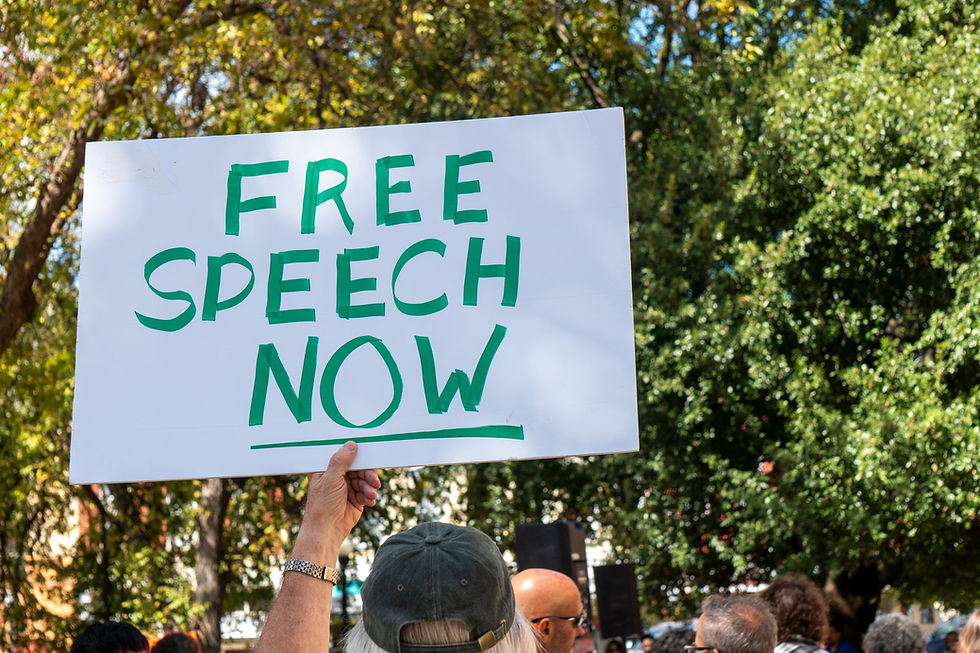
Public universities have long provided an opportunity for students to encounter the widest possible range of ideas, histories, and disciplines, often for the first time. That goal is only possible if the material in front of them reflects the world as it is, not a version filtered by whoever happens to hold power at a given moment. The Legal Defense Fund, Lambda Legal, and Davis Wright Tremaine LLP are asking the court to give that space back to the faculty, students, and patients across the Texas Tech system who rely on it.
For better or worse, Texas isn’t alone in this fight. Just a day before we filed the Texas AAUP-AFT v. Creighton lawsuit, a federal appeals court blocked the enforcement of Florida’s “Stop WOKE Act,” a 2022 law that set out to limit what schools and companies can teach about gender, race and privilege. In a 2-1 split decision, a three-judge panel on the 11th U.S. Circuit Court of Appeals ruled that Stop WOKE infringed on free-speech rights in college instruction. Florida’s policy is similar to language originally in Texas’s Senate Bill (SB) 37, which was stripped out in its final stages because of advocacy by our Texas AAUP-AFT members.
Florida's law prohibited teaching that “promotes” or “compels” students to believe eight concepts spelled out in statute, including:
That any race is “morally superior.”
That anyone is “inherently racist, sexist, or oppressive.”
Someone is responsible for actions committed in the past by members of their race.
That “such virtues as merit, excellence, hard work, fairness, neutrality, objectivity, and racial colorblindness are racist or sexist.”
An early version of SB 37, written by then-Senator Creighton, mirrored this language, mandating that courses and faculty:
Do not “distort significant historical events”
Do not teach that “one race is superior or bears personal or collective responsibility for the actions committed by other individuals of the same race”
Are not based “on a theory that racism, sexism, oppression, or privilege is inherent in the institutions of the United States or this state or was created to maintain social, political or economic inequalities.”
In the 11th Circuit ruling, Florida’s Judge Britt Grant, a nominee of President Trump, stated, “The ideas Florida targets may well be noxious. Or maybe not. Either way, in this context the First Amendment trusts students to figure it out for themselves.” Grant goes on to say that the “academic context puts us at an unprecedented First Amendment intersection: viewpoint discrimination meets public-employee speech, meets government speech, meets academic freedom. If the First Amendment offers any boundary of protection at all for public university classrooms, this statute crosses it.”
Judge Grant’s arguments are just like ours: that educators must have the right to freedom of speech in their classroom to have unfettered and rigorous academic discussions to push their students to success. And today, Friday, July 17, we pushed the Texas AAUP-AFT v. Creighton lawsuit further and filed a motion for preliminary injunction, asking the court to immediately halt enforcement of the policies which restrict faculty teaching on topics related to race, gender identity, and sexual orientation.
The preliminary injunction motion argues that immediate relief is necessary because the policies continue to cause irreparable harm to faculty members across the Texas Tech University System. In particular, the motion argues that the directives violate the First Amendment by restricting professors from teaching or assigning coursework which implicate certain perspectives on race, sexual orientation and gender identity. The motion further argues the directives violate the due process clause of the Fourteenth Amendment by imposing confusing and vague policies that leave faculty uncertain about what they can teach, including providing medical training about transgender communities and providing instruction about race, gender, and LGBTQ+ history.
The 11th Circuit’s ruling against the “Stop WOKE Act” offers clarity that even in hostile states like Florida, political meddling in public education can only go so far. As Texas AAUP-AFT v. Creighton progresses, we hope that Florida’s court decision sets a positive precedent to earn the same protections for faculty in Texas.