.png)
Texas schools are losing students and teachers. The numbers are starting to catch up.
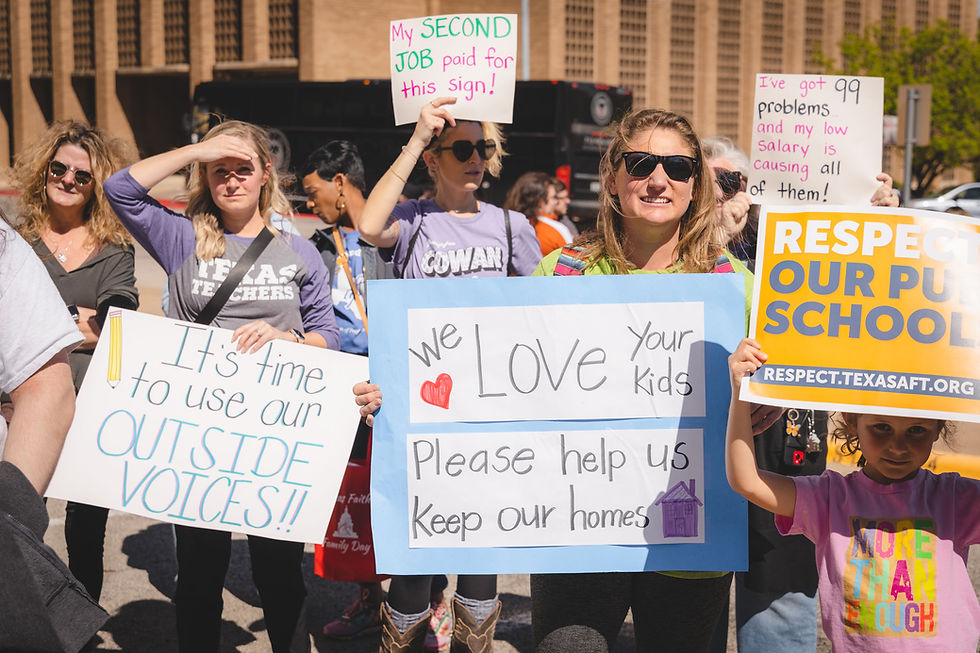
For years, conversations about Texas public schools have revolved around test scores, accountability ratings, vouchers, and curriculum fights, but two newer sets of numbers tell a different story about what is happening inside schools across the state. Texas is losing students before graduation, and at the same time, schools are struggling to hold onto the teachers that keep students engaged and supported in the first place.
The Situation
Earlier this week, the Intercultural Development Research Association (IDRA) released its latest student attrition and dropout study, and the findings represent a sharp reversal from the progress Texas had made in recent years. According to IDRA, the statewide high school attrition rate rose to 21% in the 2024-2025 school year, up from 18% the year before, marking the largest single-year increase in the 40 years the organization has tracked the data. This means that roughly one in five students who start high school in Texas still aren’t making it to graduation.
The increase is especially alarming because it follows what had briefly looked like a positive trend. Just last year, Texas reached an historic low in attrition rates, which many hoped signaled a more stable post-pandemic recovery. Instead, the newest numbers suggest that many of the underlying pressures facing students like bullying, classroom censorship, in-grade retention, and exclusionary discipline never really went away.
IDRA has long argued that attrition isn’t just an individual student issue, but a systems issue tied to staffing, school climate, access to support services, and whether students feel connected to their campuses. Those concerns are becoming harder to separate from what’s happening with educator turnover across the state, especially in districts dealing with intense instability and rapid restructuring.
No district shows that tension more clearly right now than Houston ISD.
Since the state takeover of HISD in June 2023, the district has experienced significant teacher turnover, especially on campuses tied to the New Education System (NES) reforms pushed by Superintendent Mike Miles and the Texas Education Agency (TEA). A Houston Chronicle analysis last year found teacher departures increased by 48% during the first two years of the takeover compared to the district’s previous five-year average. Some campuses saw turnover spike dramatically, with schools like Bellaire High School more than doubling their average annual teacher departures.
That churn has continued beyond the classroom. Recent reporting shows at least 17 HISD campuses are changing principals ahead of the 2026-2027 school year, part of a broader pattern that has seen nearly 40 schools experience principal turnover in a single academic year and more than 177 principal changes across 156 campuses since late 2024.
What’s more, this week it was reported that Miles plans to fire teachers who have not been making what he deems as adequate progress toward teacher certification all while the district plans to submit a waiver for his lack of certification as a superintendent, for the third time.
At the same time, HISD is also preparing for significant student enrollment declines. District officials recently projected the loss of approximately 4,000 students next year, a drop tied to broader demographic trends, dissatisfaction with district changes, and continued uncertainty surrounding the state intervention. That decline is expected to cost the district roughly $50 million in funding.
Why It Matters
Those numbers matter because student attrition and teacher attrition rarely exist separately. Schools with high educator turnover often struggle to maintain consistent relationships, stable programming, and student support systems, all of which play a major role in whether students stay engaged and ultimately graduate.
Teachers are often the ones who notice when a student begins disengaging, missing class, or struggling emotionally, and they’re usually the ones trying to intervene before a student disappears from the system entirely. But when campuses are constantly losing experienced educators, reshuffling leadership, and operating in a climate of instability, that work becomes significantly harder.
That’s part of what makes the latest IDRA findings so concerning. The attrition increase isn’t happening in isolation, it’s occurring at the same time districts across Texas are facing staffing shortages, burnout, budget pressure, and political conflict that have fundamentally changed the day-to-day experience of public education.
In Houston, educators have repeatedly described an atmosphere shaped by constant restructuring, aggressive evaluation systems, and uncertainty around staffing and campus leadership. Supporters of the HISD reforms point to test score gains and stricter accountability measures as evidence the district is moving in the right direction. But critics argue that academic improvement becomes difficult to sustain when experienced teachers continue leaving in large numbers and families increasingly choose to exit the district altogether. For more information on how one of the nation’s largest and most racially and economically diverse school districts was taken over by the state, read University of Texas at Austin Professor David DeMatthews’s recent research article titled, “Framing State Power: How Texas Constructed Legitimacy for the Houston ISD Takeover.”
And Houston is hardly alone. Across Texas, districts are managing declining enrollment, financial strain, ongoing teacher shortages, and the threat of state takeover all while being asked to implement increasingly demanding state policies around accountability, school safety, curriculum, and certification.
Where We’re At Now
The result of this is a public school system under growing stress from multiple directions at once. Texas has spent years debating how to measure student success, how to rate schools, and how aggressively to intervene in struggling districts. But the new attrition data raises a more basic question, what happens when schools can no longer consistently keep either students or teachers in the system?
Because at some point, those two trends stop being separate conversations and start becoming the same one. And right now, Texas appears to be losing ground on both fronts.